Before Methodism had chapels, conferences, or even a respectable reputation, it had women — a mother preaching to a packed farmhouse kitchen, a friend whose letter changed John Wesley’s mind, and an immigrant who refused to let the movement die in America.
Reviewed by the Beaverton First UMC editorial team ·
Every movement has an official founding story. Methodism’s usually stars John Wesley, a warmed heart, and a lot of horseback miles. It is a good story, and true. But pull the camera back a little and you find that at nearly every turning point in early Methodism, a woman is standing there first — teaching, organizing, preaching, and occasionally telling the men to get on with it. Here are a few of them.
The kitchen that outdrew the church
Start before Methodism existed, in the Wesley family rectory at Epworth, England. In the winter of 1711–12, John’s father Samuel was away in London for months at a time, leaving the parish to a curate whose preaching drew all of twenty or twenty-five people.1 His wife Susanna — mother of nineteen children, self-taught theologian, one of the most formidable minds in the county — began holding Sunday evening gatherings in her kitchen: psalms, prayers, and the best sermon she could find, read aloud.1
The neighbors noticed. “Last Sunday,” she wrote to her husband, “I believe we had above two hundred, and many went away for want of room.”1 When the embarrassed curate complained and Samuel wavered, Susanna answered with a letter that still crackles three centuries later: if you want this stopped, she told him, do not merely ask — “send me your positive command, in such full and express terms as may absolve me from all guilt and punishment for neglecting this opportunity of doing good.”1 Samuel let the meetings continue.
John Wesley grew up watching this. He later wrote that his mother had been, “in her measure and degree, a preacher of righteousness,” and historians see in her kitchen “Society” the seed of the small-group class meetings that became Methodism’s engine.1 When a lay preacher named Thomas Maxfield began preaching without authorization years later and John moved to shut him down, it was Susanna who stopped him: “Thomas Maxfield is as much called to preach the gospel as ever you were.”1 John listened — and lay preaching became the genius of the whole movement.
At nearly every turning point in early Methodism, a woman is standing there first.
“Woe be to them if they obey it not”
By the 1760s, women were leading Methodist class meetings and, in practice, preaching — though Wesley would not yet call it that. Sarah Crosby was speaking to gatherings that sometimes numbered in the hundreds.2 Her friend Mary Bosanquet, who ran an orphanage with Crosby and led class meetings of her own, was catching criticism for it: “A woman ought not to teach or take authority over a man,” people told her.2
In 1771 Bosanquet answered the critics in a letter to Wesley himself — the first full defense of women’s preaching in Methodism. Not every woman is called to preach, she granted; neither is every man. But “some have an extraordinary call to it,” she wrote, “and woe be to them if they obey it not.”2 Wesley was persuaded. That very month he endorsed Crosby as a lay preacher using Bosanquet’s own phrase — an “extraordinary call” — and in time some forty-one women became lay preachers in his movement.24 In 1787 he formally authorized Sarah Mallet to preach, over the objections of some of his male preachers.3
The woman who would not let it die in America
Methodism crossed the Atlantic in the 1760s not with a bishop but with laypeople — and it nearly fizzled on arrival. The story goes that Barbara Heck, an Irish immigrant in New York, found her fellow immigrants playing cards, swept the deck into the fire, and marched to the house of her cousin Philip Embury, a lapsed lay preacher, demanding he preach again before their friends and relatives “all go to hell.” He protested that he had no congregation and no building. “Preach in your own house and to your own company,” she said — and American Methodism was born in a living room.2
Heck did more than light the spark: she urged Embury to begin preaching in New York in 1768 and designed the John Street Chapel, the denomination’s landmark first meeting house in the city. The church’s own histories call her the mother of American Methodism.3
A line that never stopped
The line runs on from there, wider than one article can hold. Sojourner Truth — born into slavery in New York and freed in 1827 — helped found a Methodist church in Kingston that same year, and in 1843 felt “called in the spirit” to travel and preach, fusing her faith with the fight to end slavery.3 Phoebe Palmer’s home prayer meetings, begun in 1835, made her the mother of a revival movement that circled the globe.3 And in 1866, a Methodist Protestant conference in Indiana quietly ordained Helenor M. Davisson a deacon — the first ordained woman in the Methodist tradition, and the start of a much longer fight for the pulpit.3
That is the pattern worth remembering. Methodism did not graciously grant women a role; women built the thing — the kitchen meetings, the class structure, the first American congregations, the revivals. The rest of the story, from Anna Howard Shaw’s fight for ordination to the 1956 vote for full clergy rights, is the church slowly recognizing what had been true from the start. It is one reason we fully support women in ministry today — not as a modern innovation, but as our oldest tradition.
Questions people ask
Did John Wesley let women preach?
Yes. After Mary Bosanquet’s 1771 letter, Wesley recognized that some women had an “extraordinary call” to preach, and roughly forty-one women served as lay preachers in his lifetime.2
Who is called the “mother of Methodism”?
Susanna Wesley, John and Charles Wesley’s mother, whose Epworth kitchen meetings and theological writing shaped the movement before it had a name.1 Barbara Heck holds the parallel title “mother of American Methodism.”3
When could Methodist women become full pastors?
The Methodist Church granted women full clergy rights in 1956 — a story we tell here, seventy years on.3
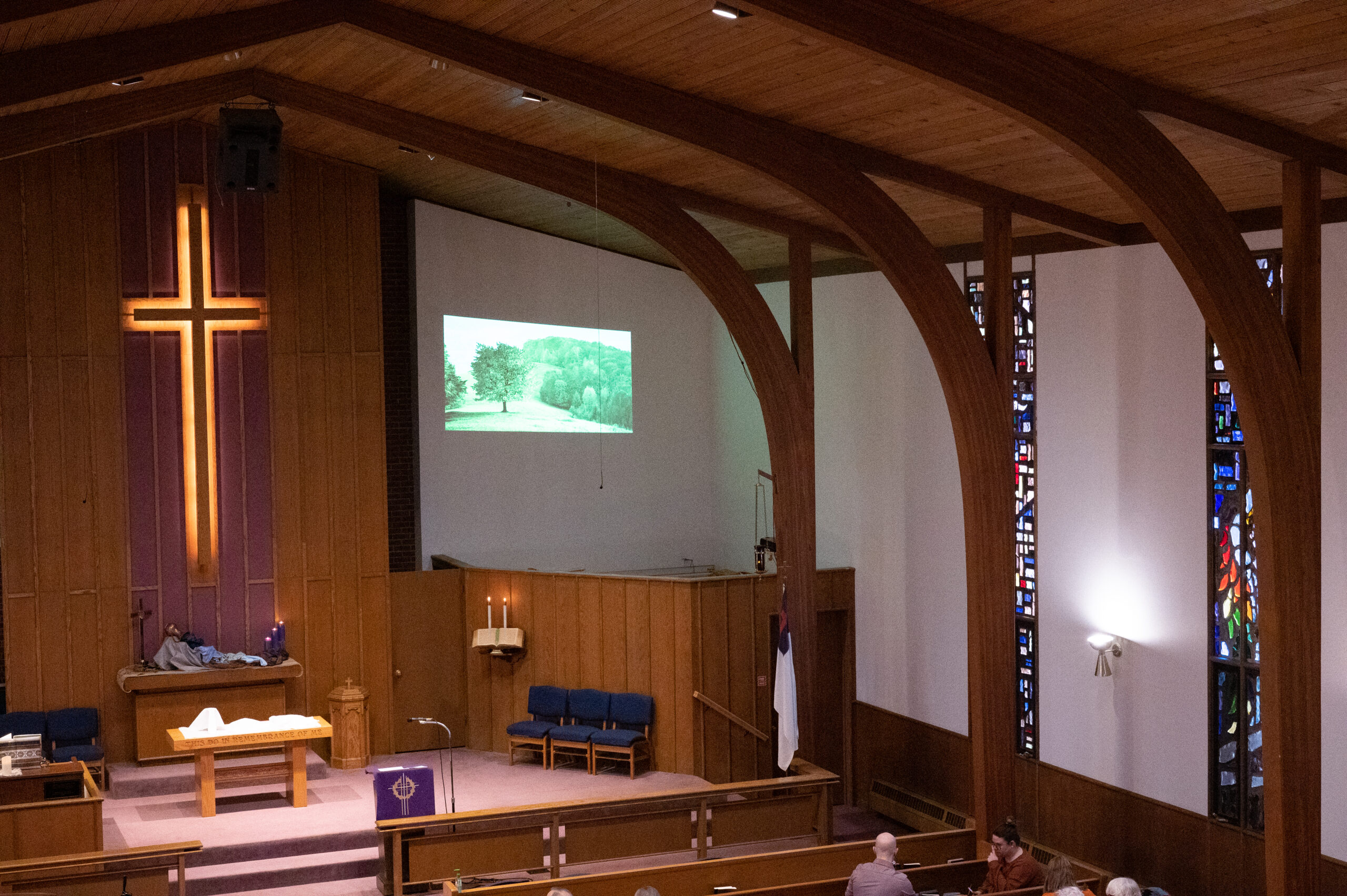
Women have preached, taught, and led at the heart of this tradition from the very beginning — and they still do at Beaverton First. If you would like to see that legacy alive on an ordinary Sunday, you are welcome to plan a visit.
Sources
- Arthur Dicken Thomas, “Profiles in Faith: Susanna Wesley,” Knowing & Doing (Winter 2003), C.S. Lewis Institute — the Epworth kitchen meetings of 1711–12, attendance “above two hundred,” Susanna’s letters to Samuel, the Maxfield episode, and John Wesley’s “preacher of righteousness” remark. cslewisinstitute.org
- Jennifer Woodruff Tait, “I received my commission from Him, brother,” Christian History Issue 82 (2004), Christian History Institute — Sarah Crosby, Mary Bosanquet’s 1771 letter and the “extraordinary call,” Wesley’s endorsement, the 41 women lay preachers, the Barbara Heck story, the 1803 ban, and Fletcher’s continued preaching. christianhistoryinstitute.org
- “Timeline of Women in Methodism,” The United Methodist Church (umc.org) — Barbara Heck (1768) and the John Street Chapel; Sarah Mallet (1787); Sojourner Truth (1827, 1843); Phoebe Palmer (1835); Helenor M. Davisson (1866); full clergy rights (1956). umc.org
- “Mary Bosanquet Fletcher,” General Commission on the Status and Role of Women, The United Methodist Church. resourceumc.org