Reviewed by the Beaverton First UMC editorial team ·
He was a failed missionary who feared he had no real faith of his own — and he became the founder of a movement that now spans the globe. The short life of John Wesley.
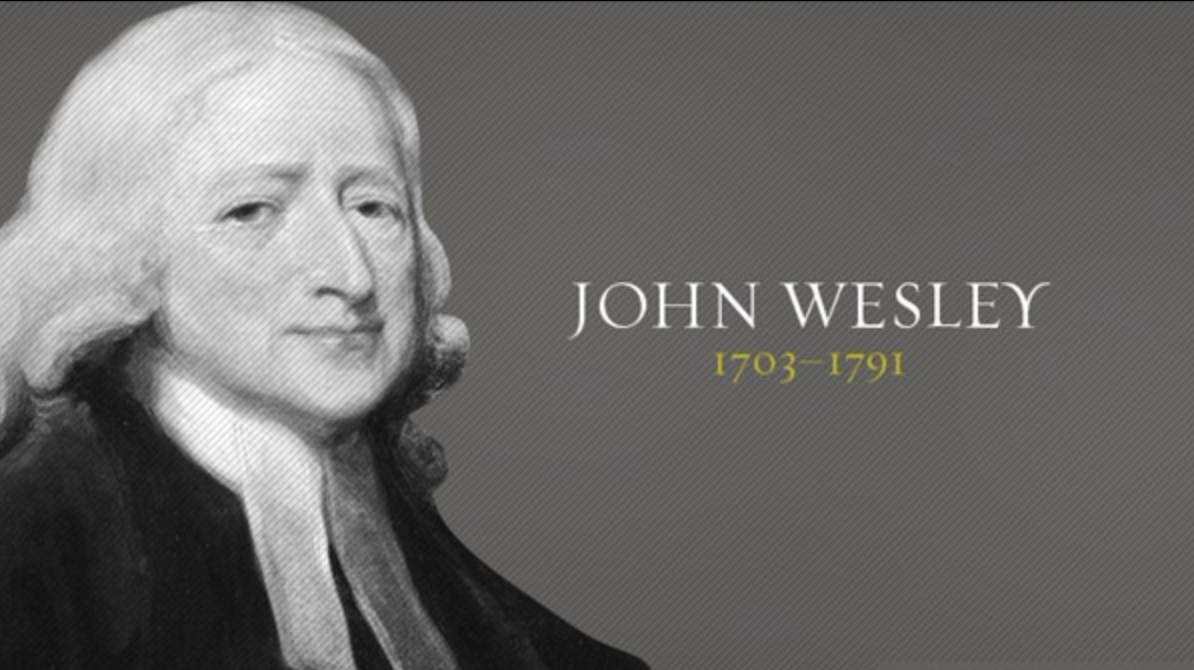
John Wesley (1703–1791) was an English clergyman, the fifteenth of nineteen children born to a strict Anglican rectory in Epworth, Lincolnshire.1 His mother, Susanna, schooled her children with famous discipline; his father, Samuel, was a Church of England priest. None of that, by Wesley’s own reckoning, gave him the one thing he most wanted — the assurance that God loved him. The story of how he found it became the founding story of the Methodist movement.
Oxford and the “Holy Club”
Wesley was ordained a priest in the Church of England in 1728 and returned to Oxford in 1729 as a fellow and tutor.1 There he and his brother Charles drew a few students into a society for prayer, Bible study, fasting, and visiting the sick and imprisoned. Their classmates mocked the group’s clockwork devotion and called them “Methodists.” The name was meant as an insult; it became a badge.12
Georgia, and a failure that changed him
In 1735 John and Charles sailed to the new colony of Georgia as missionaries. It did not go well. Wesley struggled with the colonists, made little headway with the Native peoples he had hoped to reach, and a tangled romance ended with him barring a young woman from Communion — a misstep that drew a lawsuit and sent him hurrying back to England in 1737.1 We tell that part plainly because Wesley himself did: he came home convinced he had been preaching a faith he did not truly possess.
One thing from the voyage stayed with him. In a violent Atlantic storm, while seasoned sailors panicked, a group of Moravian Christians sang calmly, unafraid of death. Their settled faith unsettled Wesley — and pointed him toward what he was missing.1
The night everything turned
On the evening of May 24, 1738, Wesley went “very unwillingly” to a religious society on Aldersgate Street in London. As someone read aloud from Martin Luther’s preface to Romans, it finally landed. “I felt my heart strangely warmed,” he wrote. “I felt I did trust in Christ, Christ alone, for salvation.”3
“I felt my heart strangely warmed.”
Methodists still keep that date as Aldersgate Day.4 The change in Wesley was immediate and lifelong: the cautious, anxious priest became a tireless evangelist.
A movement on horseback
Barred from many pulpits for his “enthusiasm,” Wesley took to the open air, preaching to coal miners and laborers in fields and marketplaces. Over fifty years he is reckoned to have traveled perhaps a quarter of a million miles on horseback and preached more than forty thousand sermons, organizing converts into the small accountable “classes” that gave Methodism its backbone.1 What he taught still shapes Wesleyan theology and how Methodists worship today.
Wesley never left the Church of England, but the movement he sparked became a worldwide family of churches numbering in the tens of millions.1 One strand of it crossed the Atlantic, rode west with the American frontier, and reached Oregon — which is how a warmed heart in a London side street connects, two centuries on, to a congregation in Beaverton.
Questions people ask
Was John Wesley the founder of Methodism?
In effect, yes. He never set out to start a new church — but the movement he organized became Methodism, and his emphases still shape what Methodists believe today.
Did Wesley care about social issues, or only personal faith?
Both, inseparably. He fought the slave trade and served the poor his whole life — the same instinct behind our work in the community and the wider Wesleyan concern for justice.
Was Wesley anti-intellectual?
Far from it — the Oxford don was endlessly curious, even dabbling in early science, and prized loving God with the mind. Honest questions were always welcome.
Sources
- “John Wesley” and “United Methodist Church,” Encyclopaedia Britannica. britannica.com/biography/John-Wesley
- “The Wesleys and Their Times: The Holy Club,” The United Methodist Church (UMC.org). umc.org
- John Wesley, Journal, entry for May 24, 1738 (Christian Classics Ethereal Library). ccel.org
- “What is Aldersgate Day?” The United Methodist Church (UMC.org). umc.org