Reviewed by the Beaverton First UMC editorial team ·
✓ Sources verified
Two centuries ago a young Methodist preacher crossed a continent to plant a mission in the Willamette Valley. He largely failed at what he set out to do — and, almost by accident, helped set Oregon on the road to becoming a state.
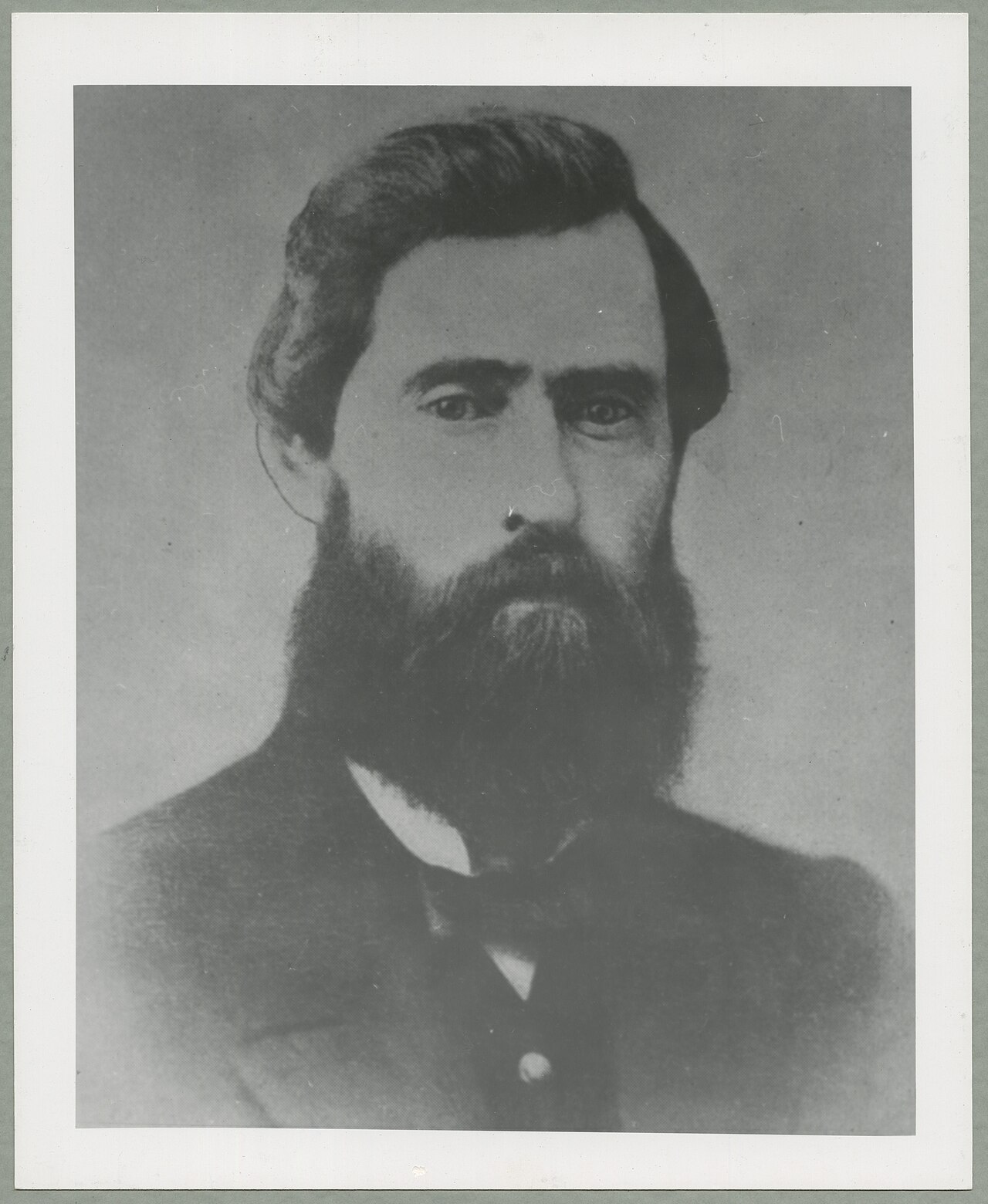
In the spring of 1834, a 30-year-old Methodist minister named Jason Lee loaded supplies onto a fur-trading caravan bound for the far side of the continent. He was answering what the church of his day called a “Macedonian Call” — a plea, printed on the front page of a Methodist newspaper, that Native people beyond the Rockies were asking for Christian teachers.1 The story that drew him west turns out to be a tangle of fact and embellishment. But the journey it launched would tie the Methodist movement — the same movement that still gathers in Beaverton on Sunday mornings — directly to the founding of Oregon itself. It’s one of those moments where, if you pull the thread, a church story and a state’s origin story turn out to be the same story.
A preacher answers a newspaper story
Jason Lee was born on June 28, 1803, in Stanstead, in what was then Lower Canada — today’s Quebec — the youngest of fifteen children.1 Fatherless at three and supporting himself by thirteen, he came to faith during a revival as a young man and later enrolled at an academy in Wilbraham, Massachusetts, to prepare for ministry.1 When his mentor Wilbur Fisk — the president of Wesleyan University — urged a response to that newspaper appeal, Lee and his nephew Daniel Lee volunteered to serve the Methodist Episcopal Church in the Oregon Country.1
To understand why a single article could send a man across the continent, it helps to know the Methodism Lee belonged to. It was a movement only decades removed from the wider story of Methodism and its founder John Wesley — restless, organized, and convinced that faith should be carried to people rather than waiting for them to arrive. Sending missionaries to the edge of a map was exactly the kind of thing this church did.
In March 1833, the Methodist newspaper The Christian Advocate and Journal ran a front-page story claiming four upper Columbia River Basin men had traveled to St. Louis to ask William Clark — of Lewis and Clark — for Christian missionaries.1 The account electrified Protestant churches. Historians have since questioned how accurately it described what the men actually wanted. The phrase echoes the Apostle Paul’s vision of a man pleading, “Come over to Macedonia and help us” (Acts 16:9).7
The mission in the valley
In 1834 Lee traveled overland with an expedition led by the trader Nathaniel Wyeth and arrived at Fort Vancouver on the lower Columbia.1 There, the Hudson’s Bay Company’s chief factor, John McLoughlin, steered him south — suggesting he settle in the mid-Willamette Valley near present-day Salem, where retired company employees had already put down roots.1 Lee chose a spot on the edge of French Prairie. The Willamette Mission he founded there was the first Protestant mission and the first organized religious enterprise in Oregon — and the first non-commercial farming community American settlers established in the valley.24
What it was not, by almost any measure, was a success at its stated aim. The Kalapuya people Lee hoped to reach had already been devastated by introduced diseases — malaria and smallpox — and were few in number and largely uninterested in conversion.1 Honesty about that part of the story matters as much as the rest of it.
Like most missions of its era, Lee’s aimed not only to convert Native people but to assimilate them — to replace their culture with that of white America, including through an “Indian Manual Labor School.”1 The Kalapuya were already reeling from epidemics that arrived ahead of the missionaries. We tell this history plainly, with open minds, because remembering a movement well means remembering its failures and harms, not only its milestones.
When a church story became Oregon’s story
Here is the surprising turn. Having struggled to grow the mission through conversion, Lee turned to recruitment from back east — and to politics. In 1838 he traveled to Washington, D.C., carrying a memorial to Congress and arguing that the United States should claim the Oregon Country; with him traveled William Brooks, a young Kalapuya convert whose presence drew crowds to Lee’s speeches.1 Two years later, in 1840, his appeals bore fruit in the “Great Reinforcement”: fifty-one people sailed around Cape Horn aboard the ship Lausanne to join him.15 Among them was George Abernethy — who would become the first governor of Oregon’s provisional government.1
The mission’s people were now woven into the valley’s civic life. Lee chaired an early 1841 meeting at Champoeg about forming a government, and on May 2, 1843, settlers gathered there voted — by a margin remembered as roughly 52 to 50 — to create Oregon’s first provisional government, a key step toward American Oregon.3 In 1842 Lee had also opened the Oregon Institute to educate settlers’ children; it grew into Willamette University, the oldest university in the West.16
A man who set out to plant a church helped, almost sideways, to plant a state.
That’s the thread worth holding onto. The institutions of early Oregon — its first government, its first university, its first farming communities of American settlers — grew in no small part out of a Methodist mission. The story of this denomination and the story of Oregon are, at their root, braided together. (You can follow that braid further in Methodism’s deep roots in Oregon.)
From mission to milestones: the Oregon Methodist decade
Key dates in Jason Lee’s Oregon years. Sources: Oregon Encyclopedia; Oregon History Project.
The Great Reinforcement is a great example of how connected this history is: a single ship, the Lausanne, carried not just preachers but Oregon’s future first governor around Cape Horn. It’s all part of Methodism’s deeper story in Oregon.
A complicated ending
Lee’s later years were hard. Criticized for the mission’s finances and for not converting more Native people, he was dismissed as superintendent in late 1843.1 He traveled east to defend himself and was ultimately exonerated by the Methodist Board of Missions — but he never returned to Oregon. He fell ill while visiting his sister in Stanstead and died on March 12, 1845. In 1906 his remains were brought back and reburied in the Lee Mission Cemetery in Salem.1
Telling the truth, and trying to make it right
An honest history of this mission has to be told from more than one side — above all, the side of the people the mission was aimed at. The Kalapuya of the Willamette Valley were not a footnote to Jason Lee’s story; they bore its sharpest cost. Beginning around 1830, malaria swept the valley with catastrophic force: by the estimate of Grand Ronde historian David G. Lewis it killed as much as 90 percent of the Kalapuya within a few years, while the Oregon Historical Society places the Willamette Valley loss in the 80-percent range.1213 Either way, a people once numbering well over 15,000 had fallen to roughly 1,000 by 1850.129 Into that catastrophe came missions like Lee’s, whose “Indian Manual Labor School” set out to remake Native children in a white, Christian mold — an early version of the assimilationist schooling the church now counts as part of the painful boarding-school history it is reckoning with.11
The dispossession that followed was formal and fast. Under the Kalapuya Treaty of 1855, the Willamette Valley tribes ceded their homeland, and by 1856 the Kalapuya had been removed to the Grand Ronde Reservation.9 Their descendants endure: today most Kalapuyan people are citizens of the Confederated Tribes of Grand Ronde, a sovereign nation that carries that heritage forward.1012
Telling this plainly isn’t an attack on the past — it’s the church keeping its own promise to be honest. The United Methodist Church has formally repented of its part in the harm done to Native peoples through its 2012 Act of Repentance with Native Peoples, which its own leaders call an ongoing commitment rather than a one-time event.11 Closer to home, the Circle of Indigenous Ministries of the church’s Greater Northwest Area — led by Rev. Dr. Allen Buck, a citizen of the Cherokee Nation — carries a Truth-Telling Project whose researchers presented their findings at the region’s 2025 annual conferences, naming the church’s historic harms to Native communities and the work of repair still ahead.8
Open minds means open eyes. We hold two things at once: Jason Lee genuinely helped shape Oregon, and the mission he led was part of a system that harmed the people who were here first. Naming that isn’t disloyalty to our history — it’s how a church that says “open hearts, open minds, open hands” actually lives those words.8
Jason Lee was earnest, flawed, and consequential in ways he never intended. The mission he came to build largely didn’t take; the state he helped midwife very much did; and the harm it carried is real and still being addressed. The movement that sent him — practical, hopeful, always on the move, and still learning — is the same one that, generations later, opened its doors a few miles up the valley in Beaverton.
Frequently asked
Did Jason Lee found Beaverton First UMC?
No. Lee’s mission (1834) was near present-day Salem, not Beaverton. But he planted Methodism in the Willamette Valley — the same tradition Beaverton First belongs to. His story is part of the wider history of Methodism in Oregon that our congregation continues.
Is it true that Methodists helped found Oregon?
In part, yes. Members of Lee’s mission, including those who arrived in the 1840 “Great Reinforcement,” played leading roles in Oregon’s first provisional government (the 1843 Champoeg vote) and in founding the Oregon Institute, which became Willamette University.3
How does this history deal with the treatment of Native people?
Honestly, and from Native sources. Like most missions of its time, Lee’s sought to assimilate Native people and ran an “Indian Manual Labor School,” and the Kalapuya had already been devastated by introduced disease.112 Today most Kalapuyan people are citizens of the Confederated Tribes of Grand Ronde, and the church’s Greater Northwest Circle of Indigenous Ministries is doing active truth-telling and repair work about exactly this history.108
Sources
- Dale E. Soden, “Jason Lee (1803–1845),” The Oregon Encyclopedia (Oregon Historical Society). oregonencyclopedia.org/articles/lee_jason
- “Willamette Mission,” The Oregon Encyclopedia. oregonencyclopedia.org/articles/jason_lee_mission_willamette_mission
- “Public Meeting at Champoeg, 1843,” The Oregon History Project (Oregon Historical Society). oregonhistoryproject.org
- “Jason Lee Biography,” Willamette Heritage Center. willametteheritage.org/jason-lee-biography
- “Great Reinforcement (1840),” The Oregon Encyclopedia. oregonencyclopedia.org/articles/great_reinforcement_1840_
- “Willamette University,” The Oregon Encyclopedia. oregonencyclopedia.org/articles/willamette_university
- Acts 16:9 (NRSV), via Bible Gateway. biblegateway.com
- “GNW Circle of Indigenous Ministries” and its Truth-Telling Project, Greater Northwest Area of The United Methodist Church. greaternw.org/circle
- “Kalapuyan peoples,” The Oregon Encyclopedia (Oregon Historical Society). oregonencyclopedia.org/articles/kalapuyan_peoples
- “Our Story,” Confederated Tribes of Grand Ronde. grandronde.org/history-culture/history/our-story
- “Native People and The United Methodist Church” (Book of Resolutions) and the 2012 Act of Repentance with Native Peoples, The United Methodist Church. umc.org
- David G. Lewis (Confederated Tribes of Grand Ronde), “Kalapuyan Ethnohistory,” The Quartux Journal. ndnhistoryresearch.com
- Robert Boyd, “Disease Epidemics, 1770s–1850s,” The Oregon Encyclopedia (Oregon Historical Society). oregonencyclopedia.org/articles/disease_epidemics_1770s-1850s
Further reading
Go deeper
Recommended through Cokesbury, the official store of The United Methodist Church, and other booksellers. These are resources, not ads — we earn nothing from them.